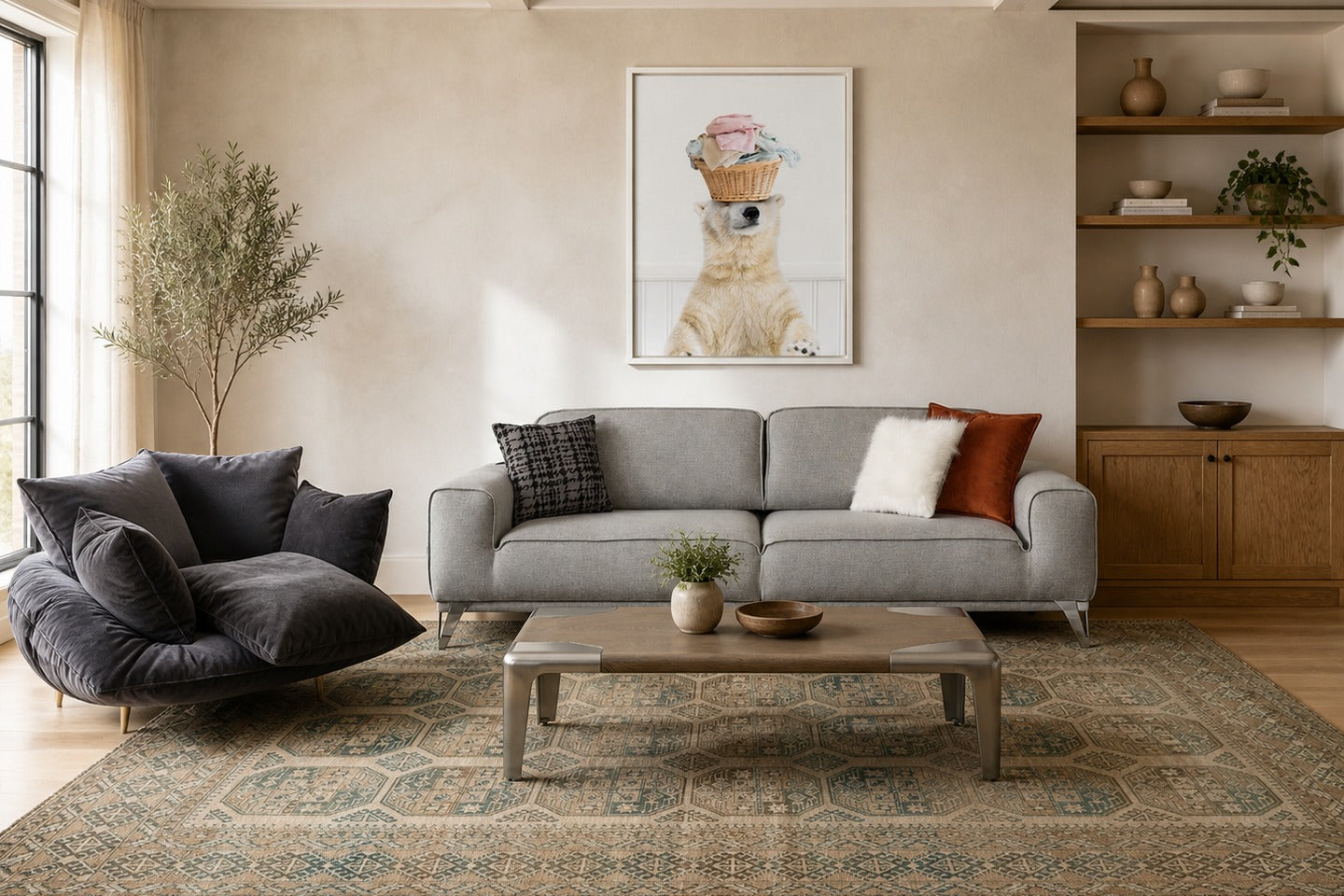
Measure your seating zone first: allow 8–18 inches of bare floor around the rug edges depending on room scale. Common successful sizes are 8'x10' for medium rooms, 9'x12' for larger rooms, and 6'x9' for smaller living rooms or beneath a loveseat. For a sofa-front rule, either place all furniture legs on the rug or at least the front legs; maintain at least 4–10 inches between rug and walls in narrow rooms. Always confirm exact product dimensions before purchase.
Choosing what size area rug for living room starts with measuring, not guessing. The right rug anchors furniture, defines a conversation area, and balances proportions — but size rules change by room shape, seating layout, and traffic flow.
This guide gives practical, repeatable rules, standard rug-size options, and straightforward measuring steps you can use while planning furniture, lighting, or art. Verify all product and room dimensions in inches and feet before you buy.
Start by measuring the seating area
Measure the full seating footprint: from the outside front edge of one armchair to the outside front edge of the opposite sofa or chair, and from the front edge of the seating back to the front of the coffee table. Record length and width in feet and inches. This gives the target rug coverage rather than the full room size.
Decide visually how much floor you want visible around the rug. A common margin is 8–18 inches of bare floor between rug edge and wall for proportion; tighter rooms can use 4–8 inches. Always double-check with a tape measure or painter’s tape before ordering.

Rug-size options and when to use them
Common rectangular sizes: 6'x9' or 5'x8' for small rooms or under a compact sofa and coffee table; 8'x10' for medium living rooms with a standard sofa and 2 chairs; 9'x12' for larger rooms where all furniture legs can sit on the rug. Choose based on the seating footprint measured earlier.
If you have an open plan or long room, consider runner pieces or layering a smaller rug on a larger neutral foundation. Convert feet to inches for finer fit: for example, 8'x10' equals 96" x 120" — compare to your measured seating footprint before buying.

Sofa and sectional layouts: rules that work
Two consistent approaches: 1) All-legs-on — place every furniture leg on the rug so the rug defines the whole seating group; this needs a rug large enough to extend under sofas and chairs. 2) Front-legs-on — place only the front legs on the rug; allow at least 4–6 inches under front legs for balance in smaller rooms.
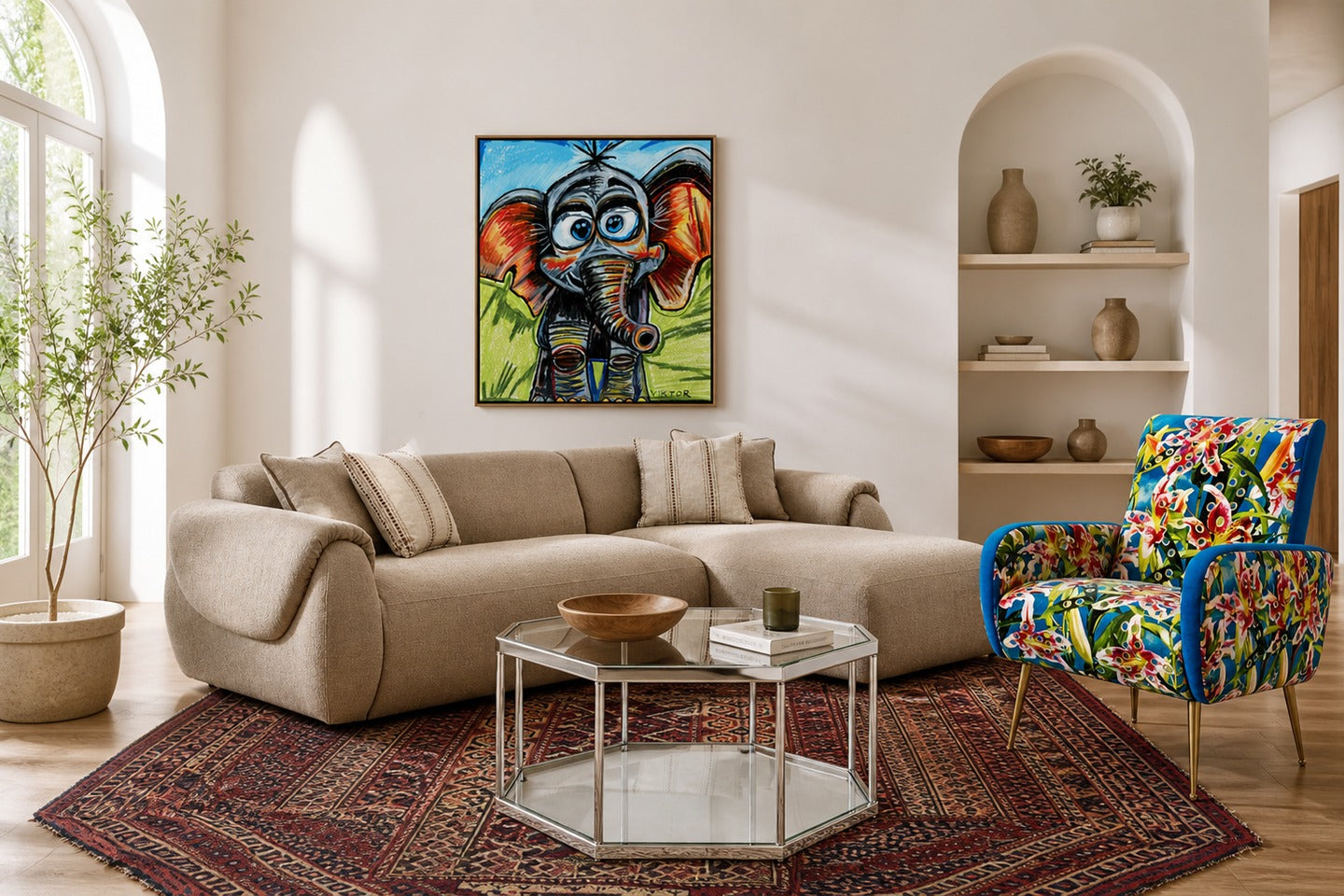
For sectionals, pick a rug that reaches under the main seating area and aligns with the sectional’s longest edge. For L-shaped sectionals, a rug that extends at least 18–24 inches beyond the sectional’s front edge keeps the layout feeling anchored; test with tape before buying.

Coffee table placement and visual math
Center the coffee table on the rug with at least 8–12 inches of exposed rug beyond the table edge in medium rooms; in tighter layouts, 4–8 inches can work. Use the table as a sizing reference: the rug should be wide enough to include both the table and the front legs of nearby seating.
If you prefer symmetry, align the rug center with the room’s focal point (fireplace, TV) and make sure the rug doesn’t cut through furniture legs awkwardly. Always allow clear walking paths — leave 24–30 inches of circulation in front of major walkways if possible.

Practical placement tips and final checks
Test rug sizes on the floor first with painter’s tape or kraft paper. Mark the rug perimeter to check door swings, heater vents, and circulation. Confirm rug pile and furniture protection needs — thicker piles can raise furniture and affect stability.
Before purchase, verify product dimensions in inches and your room measurements. Measure doorways and stair turns to ensure delivery access. If exact fit is critical, order swatches or sample squares to test color and pile in your living room lighting.

Five-step measurement checklist
Follow these concise steps to calculate the best rug size for your living room using tape and painter’s tape for a mockup.
- Measure full seating width and depth (outside edges) in inches/feet.
- Subtract desired wall margin (8–18" typical) from room width for rug width.
- Align rug length to include coffee table + front legs of seating (add 18–24" beyond table in larger rooms).
- Choose all-legs-on or front-legs-on rule; ensure rug size accommodates chosen rule.
- Mock up rug perimeter with painter’s tape, check door swings and 24–30" circulation paths.
Frequently Asked Questions
Should a living room rug go under all furniture legs?
Either approach works. All-legs-on creates a unified seating zone and looks best in larger rooms (often requires 9'x12' or larger). Front-legs-on is suitable for medium or small rooms and keeps a lighter look; ensure at least the front legs of major pieces sit on the rug.
How much bare floor should show around a rug?
Typical margins are 8–18 inches of bare floor between rug edge and wall for balanced proportion. Narrow rooms can use 4–8 inches. These are guidelines—use painter’s tape to confirm visually.
What size rug works for a sectional?
Measure the sectional’s footprint. A rug should reach beneath key seating edges: for many L-shaped sectionals, a rug that extends 18–24 inches past the sectional’s front edge works well. Larger sectionals may need 9'x12' or custom sizes.
Can I layer a small rug on a larger rug?
Yes. Layering allows you to use a decorative rug over a neutral larger foundation to protect floors and add texture. Make sure the top rug complements the larger one and leaves an even border for a tailored look.
Related Rooms and Guides
Final Takeaway
Deciding what size area rug for living room combines measured dimensions with a few consistent layout rules. Start with the seating footprint, choose whether you want all legs or front legs on the rug, and allow reasonable margins for walls and traffic.
Use painter’s tape to mock up rug edges, confirm access and circulation, and always verify product dimensions in inches and feet before ordering. These practical steps will help you buy a rug that fits both scale and use.


Share: