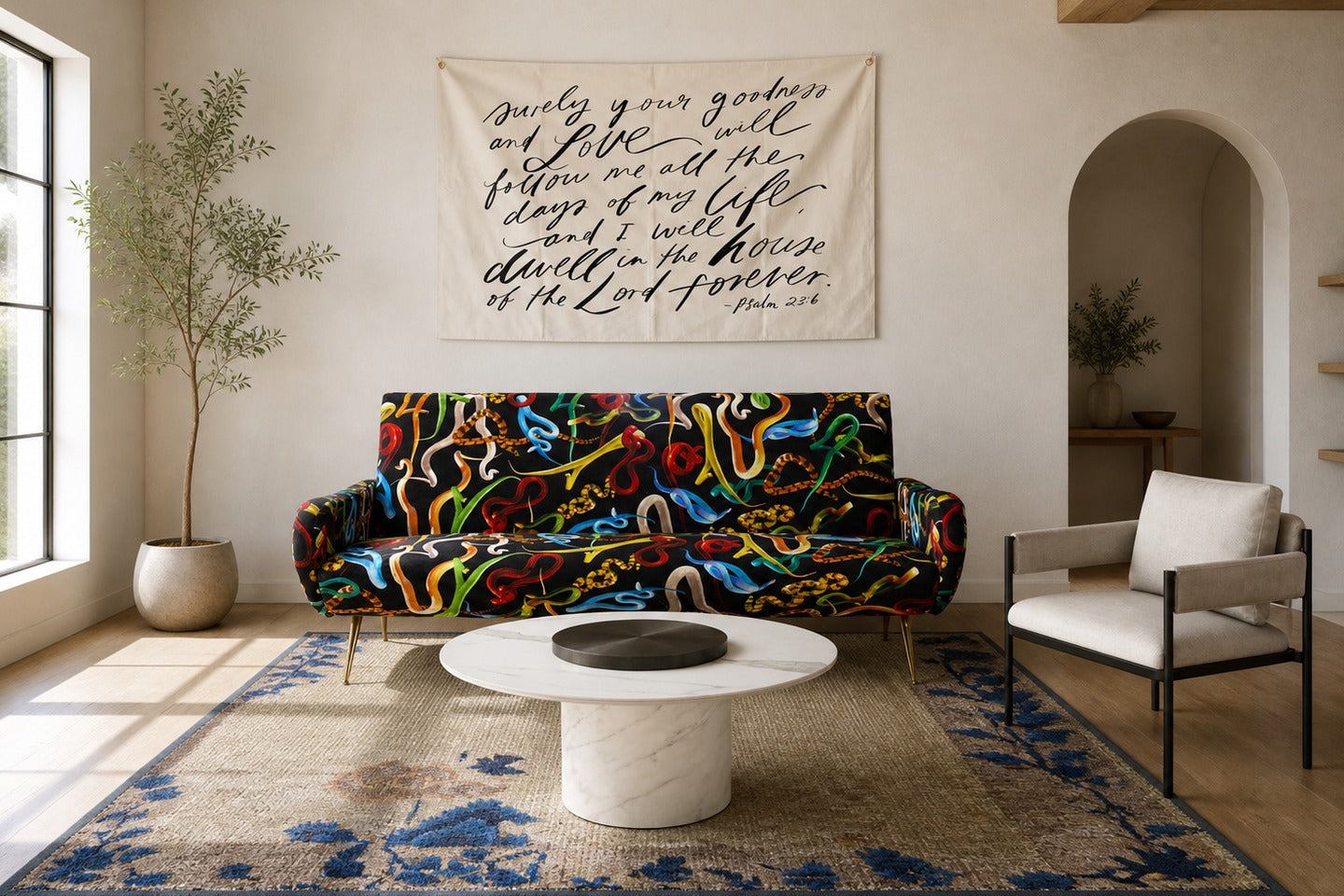
Place the rug so it defines the seating area: either all sofa legs on the rug (best for large rugs) or the front legs on the rug (most common). Aim for at least 8–12 inches of rug beyond the sofa sides and 18–24 inches in front to accommodate a coffee table. Verify room and product dimensions in inches/feet before buying and choose a rug that leaves 6–18 inches of exposed floor between the rug edge and the walls depending on room size.
Rug placement under a sofa determines how a living room reads visually and how the seating functions practically. The right placement creates a cohesive seating zone, prevents tripping at rug edges, and ensures the rug works with your coffee table and accent pieces. Measurements matter: we use inches and feet through this guide so you can check your room and product dimensions precisely.
This guide explains the two reliable placement approaches, how to measure for them, what rug sizes and shapes work with different sofas and sectionals, and simple installation checks. Read through the measuring checklist and the short FAQs so you can order a rug and place it with confidence.
Two valid placement approaches
There are two consistent ways to place a rug under a sofa: all legs on the rug, or only the front legs on the rug. 'All legs on' means the entire sofa sits on the rug; this is visually unified and works best with larger rugs that span the whole seating area. 'Front legs on' keeps the back legs off the rug and visually anchors the furniture to the rug without needing a very large piece.
Choose based on room scale, rug size and budget. For a small room or limited budget, front-legs-on is common and comfortable. For open-plan rooms or when you want a fully integrated seating area, aim for an all-legs-on layout with a rug that covers the full footprint of the sofa and adjacent seating.

Exact measuring steps before you buy
Measure the sofa length and depth in inches (or feet), and note the distance between sofa and nearest walls. For front-legs-on placement, select a rug that extends 18–24 inches in front of the sofa to comfortably fit a coffee table and walking space. For all-legs-on, the rug must be large enough so every leg of the sofa sits fully on the rug with additional space for side chairs.
Also measure the sofa height to ensure the rug pile and threshold clearance are compatible with doors or furniture legs. Lay out masking tape on the floor to visualize rug dimensions before purchasing—this prevents surprises and shows whether you need an 8x10, 9x12, or custom size.

Choosing rug size and shape for a living room
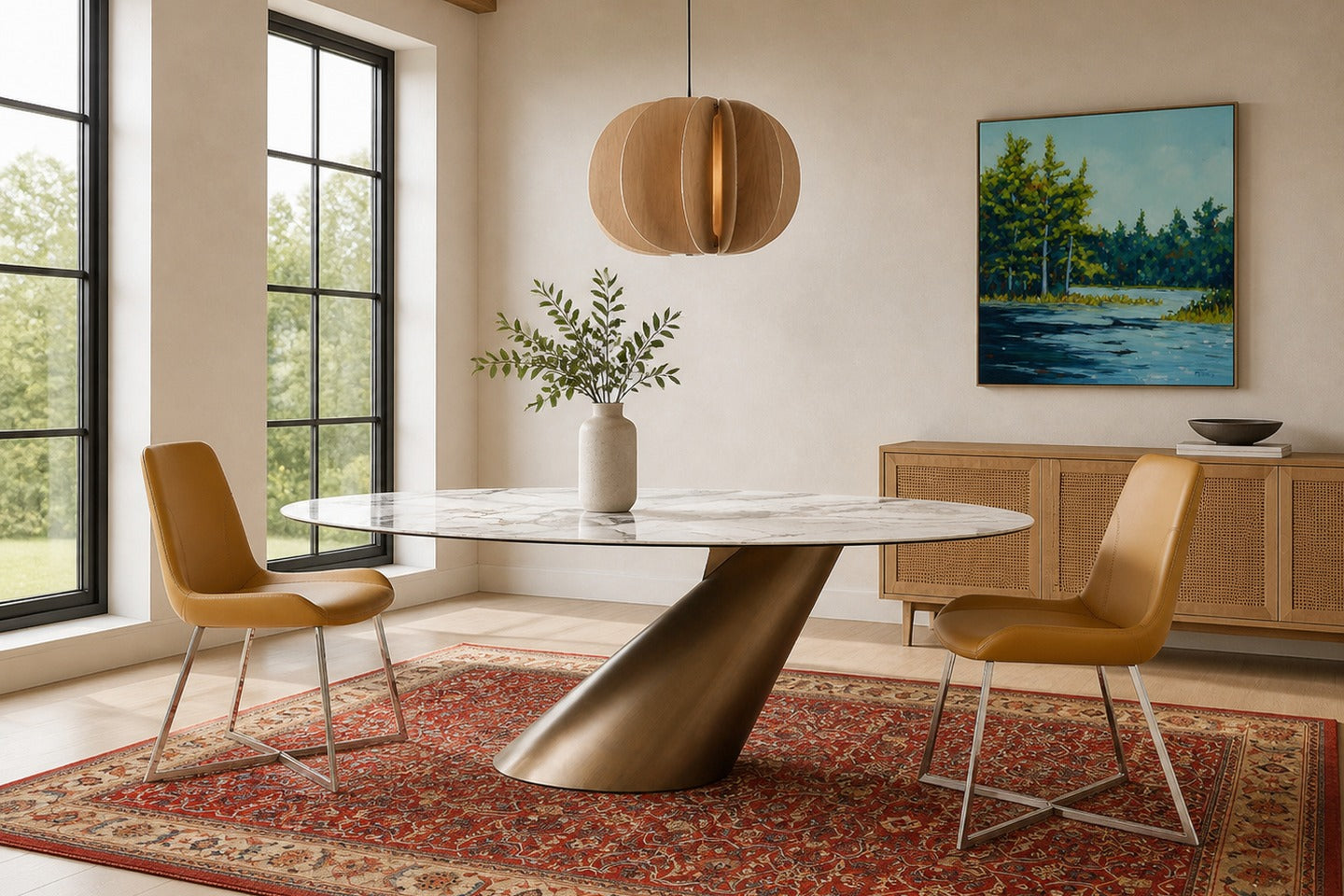
Standard living-room rug sizes are 5x8, 8x10, 9x12, and 10x14 (in feet). For a two- or three-seat sofa with front-legs-on placement, 8x10 or 9x12 are common. For full all-legs-on coverage consider 9x12 or larger depending on the sofa depth and adjoining chairs. Round and oval rugs can work under curved sofas or to soften a rectangular layout—ensure the rug extends beyond the sofa edges by the recommended inches.
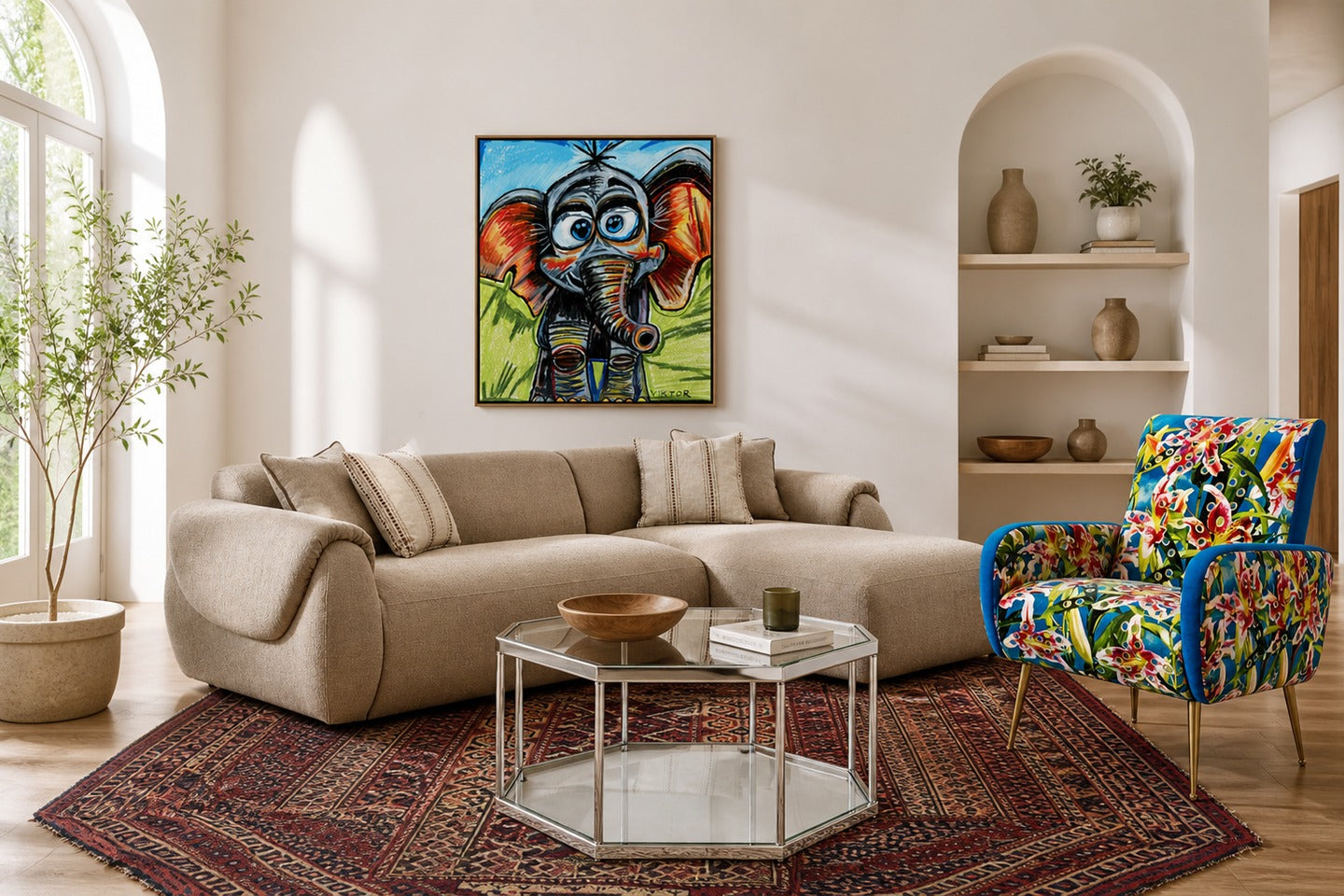
If you have a sectional, measure the entire footprint of the sectional including chaise; many sectionals require a 9x12 or custom rug. When in doubt, choose the larger standard size that fits comfortably in the room while keeping at least 6–18 inches of exposed floor between rug edge and walls.

Practical furniture arrangement and safety tips
Keep at least 6–12 inches of rug extending beyond smaller sofas' sides so the rug reads as part of the sofa, and 18–24 inches in front for coffee-table clearance. Avoid rug edges under walkways where people step off furniture; if the rug edge crosses a path, secure it with a non-slip pad and consider edge tapes to prevent tripping.
Use a high-quality rug pad sized slightly smaller than the rug to prevent shifting and to add cushion. Check transitions: low-pile rugs are better under furniture legs for stability, and verify that your rug height works with door clearances and recliner mechanisms if applicable.

Common mistakes and simple fixes
Buying a rug that’s too small for your sofa is the most common mistake—small rugs leave furniture looking disconnected. Fix: measure and step up to the next standard size, or pair two rugs with a seam hidden under the sofa in large rooms. Another error is failing to verify sectional footprints; always measure the full L-shape before ordering.
Improper anchoring leads to shifting or a sloppy look. Fix: add a pad, reposition the sofa legs onto the rug per the chosen style, and use double-sided tape at the rug corners if slipping is an issue. If a rug’s pattern or color overwhelms the sofa, either swap to a larger neutral rug or add solid throw pillows to balance the palette.

Five-step measuring checklist to place a rug under a sofa
Follow these steps with a tape measure (inches/feet). Mark with painter’s tape on the floor to confirm before purchasing.
Frequently Asked Questions
Should I put all sofa legs on the rug or only the front legs?
Both approaches work. All legs on the rug unifies the seating area but requires a larger rug. Front legs on the rug is the most common compromise: it visually anchors furniture without needing an oversized rug. Choose based on rug availability, room scale, and budget.
How far should a rug extend beyond a sofa?
For side extensions aim for 8–12 inches in smaller rooms and 18–24 inches in larger rooms. For the front, allow 18–24 inches so a coffee table fits entirely on the rug and people can step on the rug when using the seating.
What rug size should I use with a sectional?
Measure the full footprint of the sectional including the chaise. Many sectionals need a 9x12 or larger rug for all-legs-on placement; for front-legs-on you may be able to use an 8x10 if the sectional is compact. Always mock up with tape before buying.
How do I prevent the rug from slipping under the sofa?
Use a rug pad slightly smaller than the rug to add grip and cushioning. For heavy sofas, place the pad under the rug and position sofa legs on the rug. Double-sided rug tape at the rug corners and periodic repositioning will keep it flat and secure.
Related Rooms and Guides
Final Takeaway
Placing a rug under a sofa is a matter of defining the seating area with coherent measurements: choose all-legs or front-legs placement, measure in inches/feet, and pick a rug that extends the recommended distances beyond the sofa. Mocking up rug sizes with painter’s tape reveals how a rug will read in your specific room before purchase.
Follow the five-step checklist, verify door clearances and transitions, and use a rug pad to keep the rug stable. With those checks you can buy confidently and arrange the rug so the sofa and seating feel intentional and comfortable.



Share: