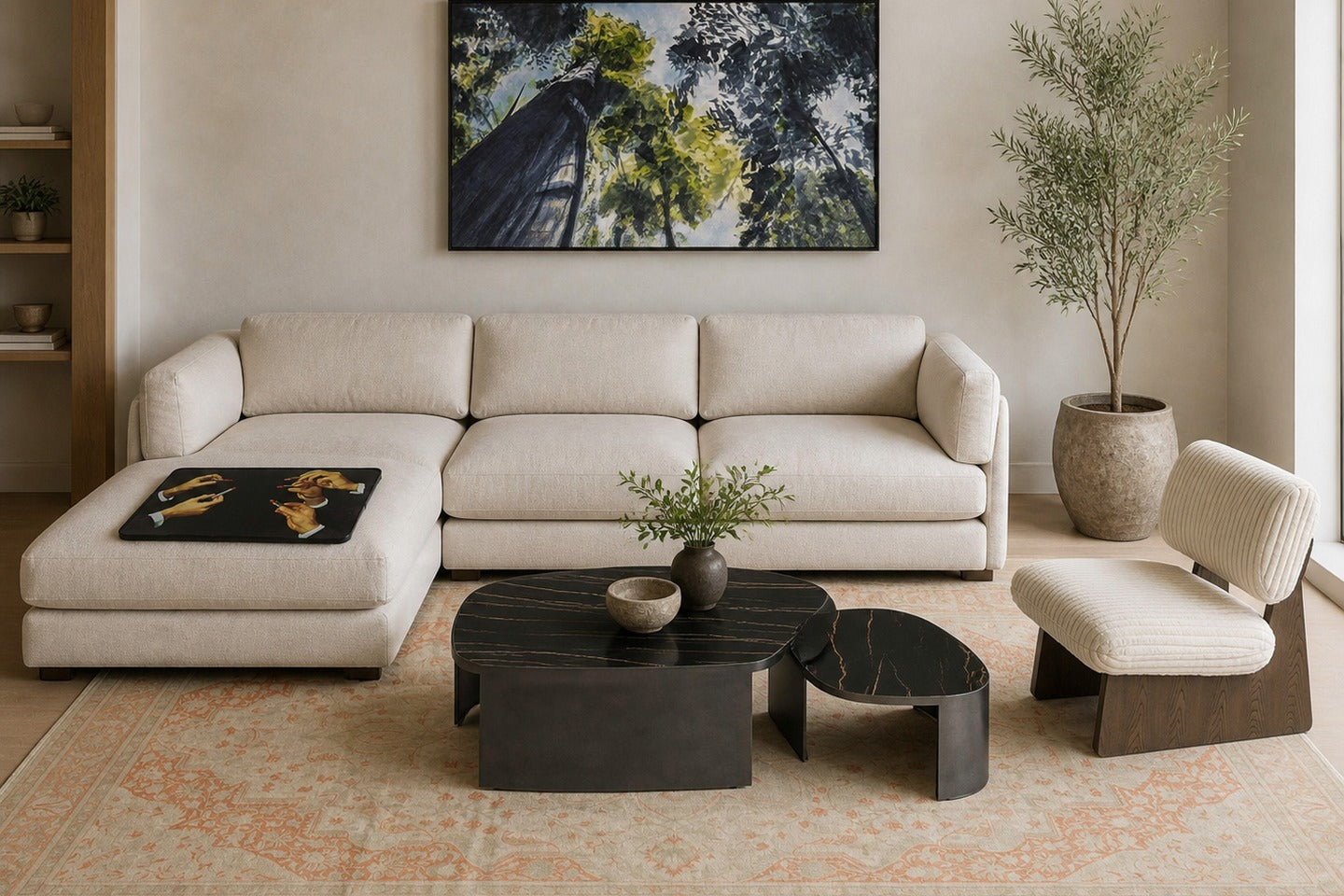
For most living rooms, round or oval coffee tables work best with sectionals because they improve traffic flow and reduce sharp corners near chaise areas. Use a rectangular table for longer, straight sectionals and a square or modular set for island-style seating. Measure 14–18 inches from the sofa edge to the table and match table height to within 1–2 inches of seat height. Verify product and room dimensions before purchasing.
Picking the right coffee table shape for a sectional depends on the sectional’s layout, traffic patterns, and how you use the surface. Sectionals come in many forms—L-shaped, U-shaped, chaise or modular—so the table you choose should solve for movement, proximity to seating, and visual balance.
This guide walks through the practical rules for choosing a shape, offers measurement checks you can use while standing in the room with a tape, and gives quick scenarios so you can pick a table that fits both the footprint and your daily needs.
Round and Oval: Best for Traffic and Chaises
Round and oval tables remove corners that catch knees and block pathways, making them ideal when a sectional includes a chaise or when the seating faces a high-traffic route. These shapes create a softer visual core and typically allow people to pass without catching clothing or bumping hips.
Choose diameter by leaving 14–18 inches between the sofa seat and table edge. For most medium living rooms (10–16 ft lengths), a round table 30–40 inches across works; for tight rooms, 24–28 inches keeps the floor plan breathable. Always verify product size in inches against the room before buying.

Rectangular: Pairing with Long or Straight Sectionals
A rectangular coffee table aligns with long, straight sectionals and helps maintain a clean sightline to a TV or fireplace. This shape is also useful when you regularly set down trays, books, or a centerpiece because it offers a predictable edge and more linear surface area.
Aim for table length to be two-thirds to three-quarters of the exposed sofa run so the table feels anchored rather than lost. Keep the 14–18 inch clearance in mind and pick a narrower width (16–22 inches) if you need walkways on either side.

Square and Modular: Island Seating and Symmetry
Square or modular tables work well when the sectional forms an island or U-shaped conversation area where backs face open space. A square table creates symmetry and can be swapped for two nesting pieces when you need flexibility.
If the seating fully surrounds the table, choose a square table about the same proportion as the internal seating gap—typically 36–48 inches per side for larger arrangements. Consider splitting the footprint into two smaller tables if you want to move pieces for activities.

Narrow Benches and Rectangle Trays: For Tight Walkways
When the sectional sits in a narrow room or leaves minimal walkway, a narrow bench-style or slim rectangular table (10–14 inches deep) preserves circulation while offering a surface for drinks and décor. These tables also slide under lower chaise ends.
Measure the walkway: keep at least 30–36 inches of clear path for frequent traffic. If you must compromise, choose a low-profile table so sightlines stay open and occupants can cross comfortably without squeezing past the furniture.

Scale, Height, and Function: Final Fit Checks
Height matters: set the coffee table within 1–2 inches of the sofa seat height for comfort when reaching. If you prefer a lower look, keep it no more than 4 inches below seat height to avoid awkward reaches. Always measure seat heights in inches before ordering.
Function drives shape choice—entertaining calls for longer rectangular surfaces; homes with kids or active traffic favor rounded edges. Confirm rug placement and side table spacing too: 14–18 inches between sofa and table, 18–24 inches for side tables, and adjust rug size to accommodate the combined footprint.

Quick Measurement Checklist Before You Buy
Use these five steps in the room with a tape measure to confirm the table shape and size you plan to buy. Don’t rely on photos; verify measurements in inches and feet against product specs.
- Measure the exposed sofa run in inches (length from arm to chaise or end).
- Leave 14–18 inches between sofa edge and table; mark that distance on the floor.
- Check table height against seat height; aim for within 1–2 inches of seat height.
- Measure walkway width; keep at least 30–36 inches for main traffic aisles.
- If using a rug, confirm the table and sofa sit on the rug per rug-size guide before finalizing.
Frequently Asked Questions
How close should a coffee table be to a sectional?
Aim for 14–18 inches between the sofa edge and coffee table. This distance allows comfortable reach and legroom while maintaining circulation. Verify using a tape and mark the spacing on the floor before shopping.
What coffee table height works with a sectional?
Choose a table within 1–2 inches of the sofa seat height. Slightly lower is acceptable for a casual look, but avoid tables more than 4 inches lower to prevent awkward reaching. Always measure seat height in inches first.
Can I use two small tables instead of one with a sectional?
Yes—two small or nesting tables can adapt to different seating configurations and make cleaning or entertaining easier. Use matched heights and staggered placement so they read as one cohesive surface when grouped.
Which shape is safest with a sectional and kids?
Round or oval tables are safest because they eliminate sharp corners that can cause bumps. Choose sturdy construction and consider rounded-edge resin or upholstered-top tables for additional impact protection.
Related Rooms and Guides
Final Takeaway
Choosing the right coffee table shape for a sectional comes down to layout, circulation, and how you use the surface. Round or oval tables are broadly forgiving for chaises and traffic flow; rectangular tables suit long, straight sectionals; square or modular tables work for island seating.
Before you buy, measure in inches: sofa run, seat height, clearance zones, and rug placement. Use the checklist here to confirm dimensions in your room and compare them to product specs so the table looks and functions as intended.




Share: