12 Woodworking Projects With Resin That Sell at Local Markets
If I were building wood-and-resin pieces for a local market, I would not start with the biggest river table I could make. I would start with products people understand quickly, can carry home easily, and can picture giving as a gift. That is the real filter here.
The goal of this article is not just traffic. The lead objective is product purchase first, then future email signup when the Resin Society list path is wired in. So every idea has to earn its place: it should be visual enough for Pinterest, practical enough to make in batches, and connected to a real product or collection path.

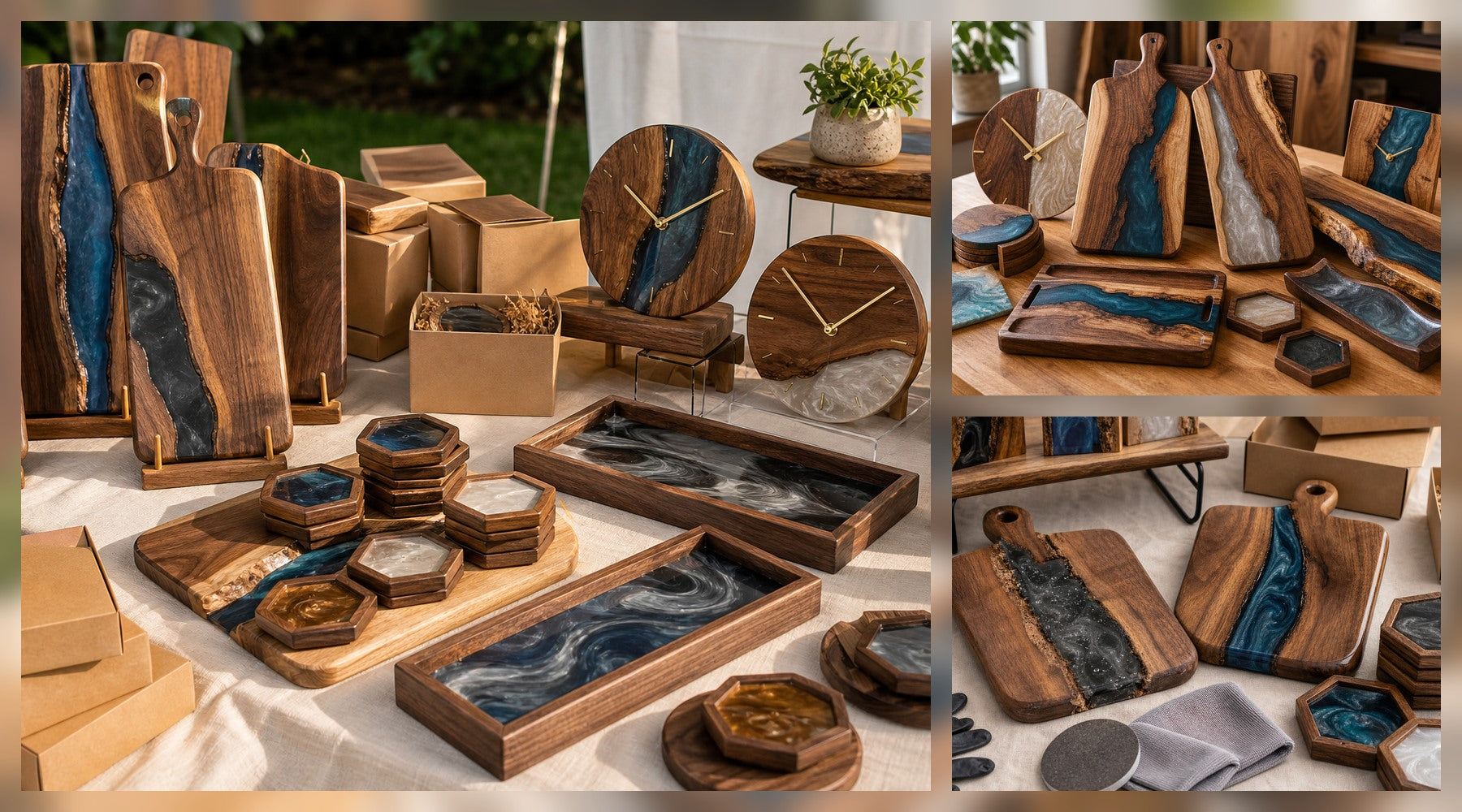
Market-ready wood and resin products need to look cohesive, giftable, and easy to understand at a glance.
The quick answer: what wood-and-resin projects sell best?
The safest bets are small, useful, giftable products: coaster sets, resin charcuterie boards, resin serveware, epoxy resin clocks, ring dishes, and small decor pieces. Larger furniture like epoxy coffee tables can sell too, but I would treat it as a custom-order lead magnet unless you already know your market buys furniture on-site.
Search intent I'm writing for
The searches around this topic are not asking for resin chemistry. They are asking, "What can I make that people will actually buy?" So this draft answers the idea question first, then goes into production, pricing, tools, mistakes, and next steps.
Table of contents
- Best product ideas for local markets
- How I would choose what to make first
- Tools and supplies I would set out
- Pricing and batch math
- Common mistakes
- FAQ
The projects I would actually test first
1. Resin river charcuterie boards
These are probably the easiest wood-and-resin product for a stranger to understand in five seconds: real wood, a useful serving shape, and a river detail that makes the board feel giftable. I would keep the first batch tight: one or two board shapes, two resin colors, and a finish process I can repeat without thinking too hard.
Good fit because boards can sit at a higher price point than coasters, photograph well from above, and connect naturally to Resin Society collections like resin charcuterie boards, resin river charcuterie boards, and ocean resin charcuterie boards.
What I would watch: Watch the food-safe finish question, the board weight, and edge cleanup. A beautiful board with rough edges feels unfinished fast.
2. Coaster sets with one clear color story
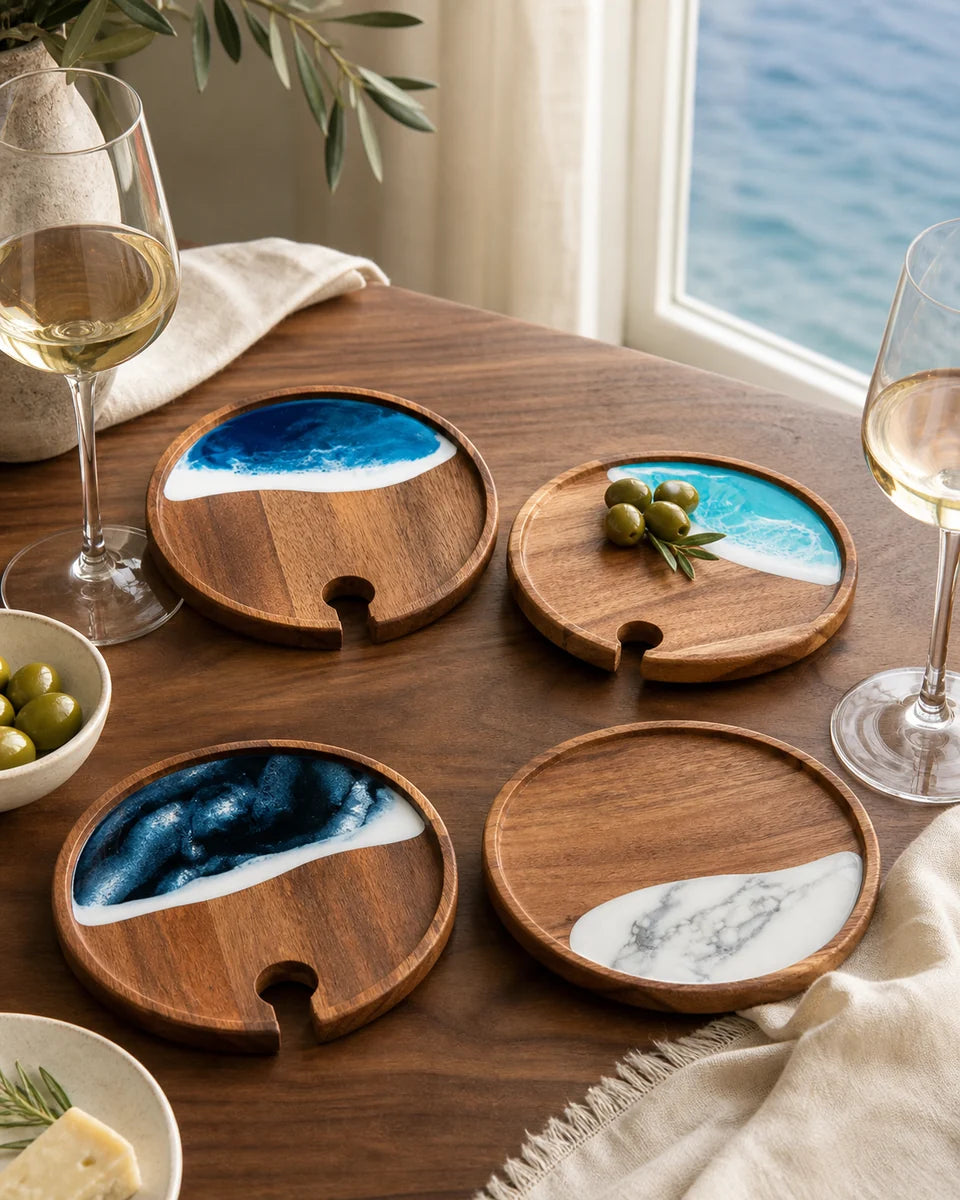
Coasters are not exciting because they are tiny. They are exciting because they are repeatable. A four-piece set lets you test pigment, finish, packaging, and pricing without gambling a whole slab. For a local market, I would build them as collections instead of one-offs: smoky walnut, ocean blue, pearl white, black-and-gold, or clear botanical.
This is where batch work helps. Cut blanks at the same time, seal edges at the same time, pour in small runs, and package in sets so the table looks intentional instead of random. I would keep the color family repeatable with powder pigments or liquid resin pigments instead of inventing a new palette for every set.
What I would watch: The mistake is making every coaster different. Variety is fun in the studio, but a buyer usually wants the set to feel like a set.

Coaster sets are a good first product because they teach batch consistency, packaging, and photography without using a full slab.
3. Small resin trays and catchalls
Small trays work because they are useful in a way people can picture immediately: keys by the door, jewelry on a dresser, a candle tray, a coffee table accent. They also give you more design space than coasters without the build complexity of furniture.
If I were testing this category, I would compare handmade pieces against Resin Society tray categories like resin metal trays, resin stoneware trays, and resin ceramic trays so the finished look has a real home-decor lane.
What I would watch: Do not overfill the resin effect. A tray has to look clean from five feet away and interesting up close.

Boards and trays usually need cleaner finishing than people expect because buyers handle them before buying.
4. Resin wall clocks
Clocks give you a higher perceived value because they feel like decor and function at the same time. They also hang vertically at a booth, which matters more than people think. A vertical product can catch attention from across the aisle while smaller items do the close-range selling.
I would keep clock designs simple: walnut split clock, ocean resin clock, emerald geode accent, smoky black and gold, or clear resin with one embedded detail. Resin Society already has a natural path here with epoxy resin clocks.
What I would watch: Clock hardware needs to be clean, centered, and quiet. If the clock feels flimsy, the resin work will not save it.
5. Serving boards with resin accents
A serving board is different from a charcuterie board in the buyer's mind. It can be smaller, more decorative, and easier to gift. This is where offcuts can become real products instead of scrap.
I like these for markets because they let you use attractive wood without needing a huge slab. They also pair naturally with gift add-ons from a lane like charcuterie accessories and gifts: care cards, board oil, cheese knives, or matching coasters.
What I would watch: Be careful with claims. If the board is decorative, say so. If it is food-contact safe, know exactly what finish and resin system you used.
6. Mini resin shelves or ledges
Small shelves are underrated because they let a woodworker show joinery, edge work, and resin detail without building a full table. A narrow live-edge ledge with a clear or smoky fill can feel custom but still be small enough for a market booth.
This is a better fit for buyers who like resin decor but are not ready for a furniture purchase. It can also act as a bridge toward custom work, especially if your long-term goal is higher-ticket resin console tables or custom wall pieces.
What I would watch: Mounting hardware has to be simple and trustworthy. If a buyer cannot picture how it goes on the wall, they hesitate.
7. Resin inlay cutting-board style blanks
I would not make every board a full river pour. Sometimes a thin inlay line, corner fill, or knot repair looks more expensive because it feels controlled. This is especially true if the wood is already beautiful.
The product opportunity is restraint. Use resin to highlight the wood, not bury it. This is where pigments from powder pigments or liquid resin pigments can give you a repeatable color family.
What I would watch: The danger is calling something a cutting board when the resin area is not meant for knife contact. Be clear about use and care.
8. Small side tables as custom-order samples
I would not bring ten side tables to a market. I would bring one excellent example and use it as a lead generator. A small river side table, plant stand, or drink table can start conversations that coasters never will.
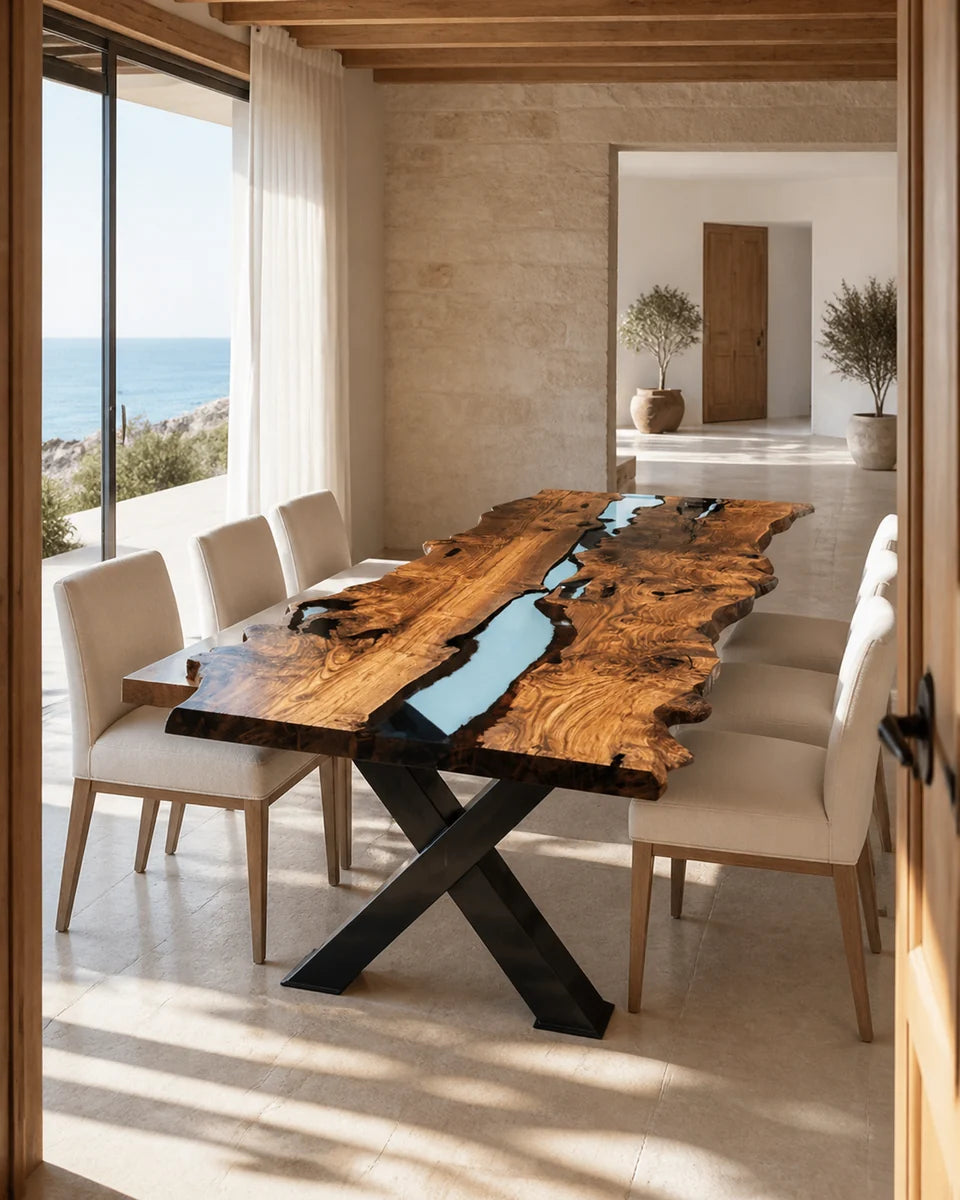
This is where the conversion goal changes. The table on the booth is not only inventory; it is proof that you can take on custom work. I would link this idea back to real table paths like epoxy river tables, epoxy coffee tables, and epoxy dining tables, then keep finished photos ready for anyone who wants a larger piece.
What I would watch: Do not overbuild inventory here. One or two showcase pieces are enough unless you already know your local market buys furniture.

Batching blanks, molds, finishing tools, and packaging turns resin work into a repeatable product line instead of one random pour at a time.
9. Resin ring dishes and jewelry trays
These are fast to explain and easy to gift. A small dish can use leftover resin, small wood slices, shells, botanicals, or pigment tests, but still become a polished product if the edge and finish are clean.
They also sit near checkout nicely. I like them as an add-on product next to boards and trays because they make the booth feel fuller without needing huge material cost.
What I would watch: The risk is making them look like random leftovers. Keep sizes, colors, and packaging consistent.
10. Ornaments and seasonal resin wood pieces
Seasonal products can be powerful because the buyer has an immediate reason to buy. Wood-and-resin ornaments, small tree shapes, beach-themed pieces, or holiday catchalls can work well when the booth timing is right.
The Resin Society catalog already has coastal and giftable lanes, so I would connect seasonal resin work to existing categories like ocean resin art, resin decor, and small serveware instead of treating it as a separate craft universe.
What I would watch: The trap is making inventory that only sells for three weeks. Keep the design flexible enough to become winter decor, coastal decor, or gift tags after the holiday rush.
11. Resin repair sample blocks for custom orders
This is not a product most people think to sell, but it is useful at a booth. Bring small sample blocks showing clear fills, smoky fills, black fills, ocean blue, and metallic accents. People can touch them, compare finishes, and understand custom options.
This turns a market table into a consultation table. It is especially useful if the long-term goal is custom tables, slabs, benches, or built-ins. For supply planning, I would separate small pours from deeper casting work and look at art and craft epoxy resin, bar and table top epoxy resin, and deep pour epoxy resin as different use cases.
What I would watch: Labeling and photos matter here. The sample block does not sell itself unless the customer can connect it to a finished project.
12. Matched gift bundles
Bundles are where small products start feeling like a brand. A coaster set plus a matching tray, a board plus charcuterie accessories, or a clock plus small decor can raise the average order without forcing the buyer into a custom piece.
This is also a Pinterest-friendly idea because bundles photograph well. A clear bundle gives every pin and booth photo a stronger story.
What I would watch: Do not bundle random leftovers. Make the colors, packaging, and price make sense together.
How I would choose the first three products
I would pick one low-ticket product, one mid-ticket product, and one conversation piece. For me, that would probably be coaster sets, resin charcuterie boards, and one small side table or epoxy resin clock. That gives the booth a ladder: easy yes, better gift, and custom-order proof.
The real test is not which project looks coolest in the shop. It is which one can be made consistently, packed safely, priced profitably, and photographed in a way that makes someone stop scrolling or stop walking.

A good market display makes product tiers obvious: small gifts, mid-priced boards and trays, and a few custom-work conversation pieces.
Tools and supplies I would set out before making inventory
For a market batch, I care about repeatability more than novelty. I want accurate measurement, clean edges, consistent sanding, and packaging that protects the piece. Resin Society internal links should come first where they fit, and Amazon tool links should support the actual build.
- Epoxy Tools & Resin Supplies for resin-specific shopping paths.
- Art & Craft Epoxy Resin for smaller decorative pours and test batches.
- Bar & Table Top Epoxy Resin for coating-style projects and finished surfaces.
- Deep Pour Epoxy Resin for thicker river-style fills and casting work.
- Powder Pigments and Liquid Resin Pigments for repeatable color families.
- Respirator Mask
- Nitrile Gloves
- Scale
- Mixing Cups
- Sheathing Tape
- Clamps
- Dry Sander
- 3M Sandpaper
- Polish
- Buffer / Polisher
Pricing: the simple math I would not skip
I would price every product with the same basic formula: materials + labor + packaging + selling fees + overhead + profit. The part makers usually miss is overhead. Sandpaper, failed pours, booth fees, card fees, photography time, and packaging all count.
For a coaster set, I would track resin used, wood blank cost, pigment, sandpaper, box, label/card, and the real minutes spent finishing. For a board, I would add more for wood selection, flattening, sanding, oiling, and the fact that boards are handled closely before purchase.
Common mistakes I would avoid
- Making every piece one-of-one before proving anything sells.
- Using too many colors in one booth display.
- Underpricing because the resin pour was small.
- Forgetting packaging until the night before the market.
- Skipping care instructions on boards, trays, and serving pieces.
- Taking dark photos that hide the resin depth and wood grain.
- Letting custom-order conversations disappear without a follow-up path.
Helpful Resin Society paths from this guide
If I were using this article as a shopping and planning hub, I would send readers toward the product paths that match the project size instead of making them hunt through the whole store.
- Resin charcuterie boards and resin river charcuterie boards for higher-ticket market pieces.
- Resin metal trays, resin stoneware trays, and resin ceramic trays for giftable home-decor comparisons.
- Epoxy river tables, epoxy coffee tables, and epoxy dining tables for custom-order inspiration.
- Epoxy tools and resin supplies, powder pigments, and liquid resin pigments for the build side.
Pinterest angles for this article
- Woodworking projects with resin that actually make sense to sell.
- The local market resin products I would test first.
- Coasters vs boards: which resin product should you start with?
- How I would price wood-and-resin products without guessing.
- Market booth ideas for resin makers who want repeat buyers.
FAQ
What resin woodworking projects sell best at local markets?
Small, useful, giftable pieces usually sell best first: coaster sets, boards, trays, clocks, ring dishes, and small decor. Larger tables can work better as custom-order examples.
Are resin charcuterie boards worth making?
Yes, if the finish is clean, the wood is attractive, and the board is priced like a handmade gift instead of a cheap craft. Care instructions matter.
Should I make one-off pieces or repeatable collections?
I would do both, but not evenly. Build repeatable collections for inventory, then use a few one-off pieces to make the booth feel special.
How many products should I bring to a first market?
I would rather bring a focused display than a huge random spread. Three to five product families with clear colors and pricing will usually look stronger.
What is the biggest mistake resin sellers make?
Underpricing and inconsistency. If the product takes real sanding, packaging, and booth time, that has to show up in the price.
Final thought
If I were starting from zero, I would not chase every resin idea at once. I would build a small market line that looks intentional: one coaster set, one board style, one tray or clock, one conversation piece, and one clear next step for custom work. That is how one blog post becomes more than traffic. It becomes a product path.
Next step: Start with resin charcuterie boards, resin serveware, resin trays, resin pigments, or resin tools and supplies depending on what you want to make first.




Share: