A room does not have one mood. It has a rhythm—and light is what reveals it.
The same sofa, rug, chair and sculptural objects can feel crisp in the morning, energetic at midday, cinematic at sunset and intimate after dark. That shift is not decorating sleight of hand. Light changes the apparent color, contrast, texture and visual hierarchy of everything it touches. Once you understand those variables, you can change how a room feels without replacing the room.
Color temperature changes the emotional read
Correlated color temperature, or CCT, describes whether white light appears warmer and more amber or cooler and more blue-white. It is measured in kelvins (K). The U.S. Department of Energy describes 2,700 K as friendly and personal, 3,000 K as warm and pleasing, and 4,100 K as neat, clean and efficient. The important point is that a higher number is not “better”—it is simply cooler in appearance.
That makes color temperature a design tool. Warm light tends to deepen walnut, rust, cream and red. Cooler daylight can make stone, metal and pale neutrals appear cleaner and more graphic. Mixing temperatures carelessly, however, can make adjacent surfaces look disconnected. Start with one dominant temperature for the room, then let decorative light provide controlled contrast.
Morning: let daylight establish the room
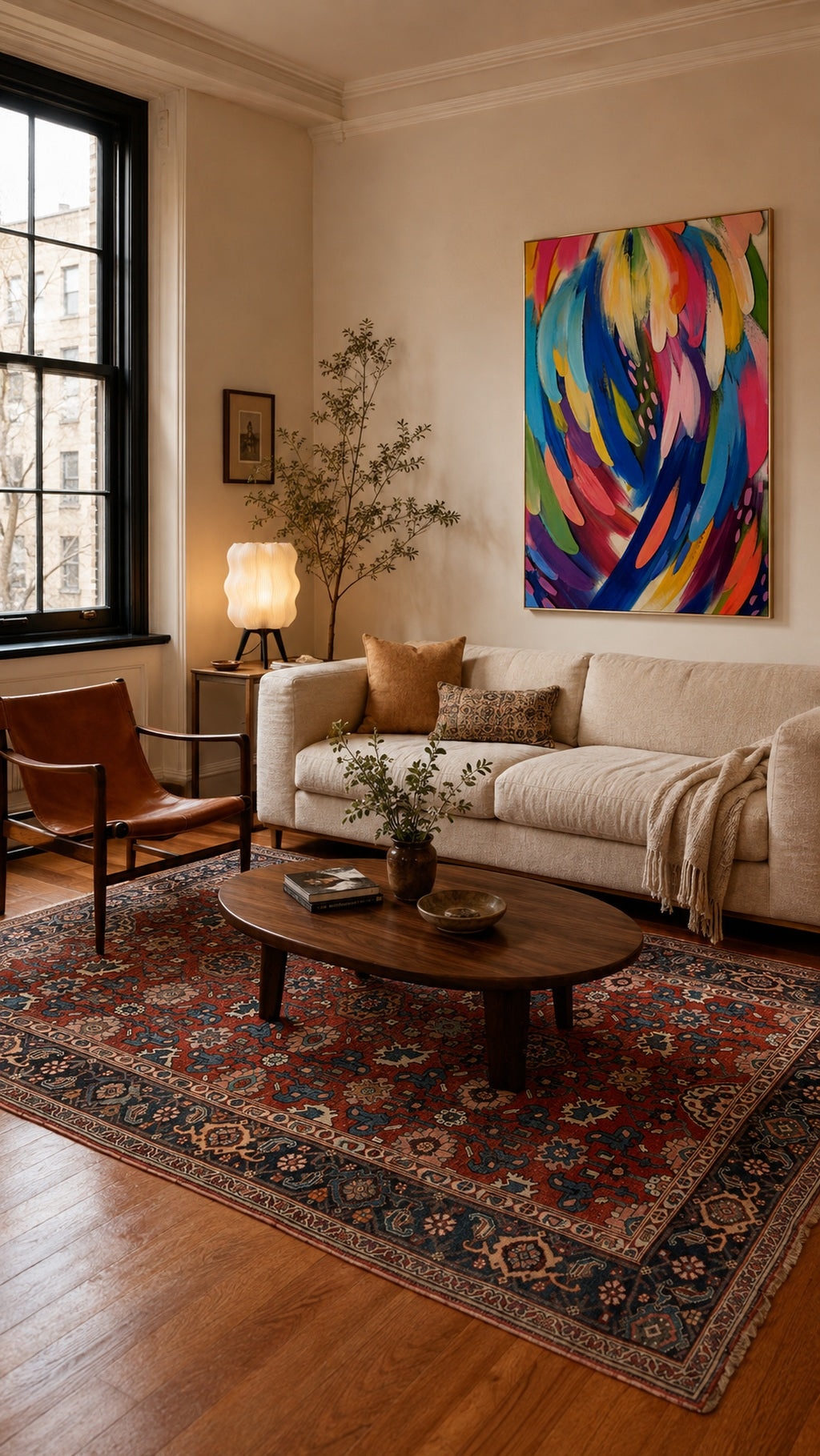
In the morning, open the room before turning everything on. Natural light gives materials a broad, legible range: wood grain becomes visible, textured textiles separate from one another and metal reads as metal rather than a bright patch. If the daylight is gentle, use a warm practical lamp only where the room needs balance—not to erase the direction of the sun.
Morning light works especially well when the composition has a clear path from window to foreground. Leave some surfaces in partial shadow. A completely even room may be bright, but it often looks flatter than a room with a believable gradient of light.
Midday: control contrast instead of fighting it
At midday, the room often receives its strongest and coolest natural light. This is when pale upholstery and reflective finishes can dominate. Rather than filling every shadow with more ceiling light, soften the window with a sheer curtain, reposition a reflective object, or add a lower-output task light away from the glass.
Brightness and color temperature are separate decisions. A room can be bright and warm, dim and cool, or any combination between. Choose the amount of light for the activity, then choose its color for the atmosphere.
Sunset: let one direction do the storytelling
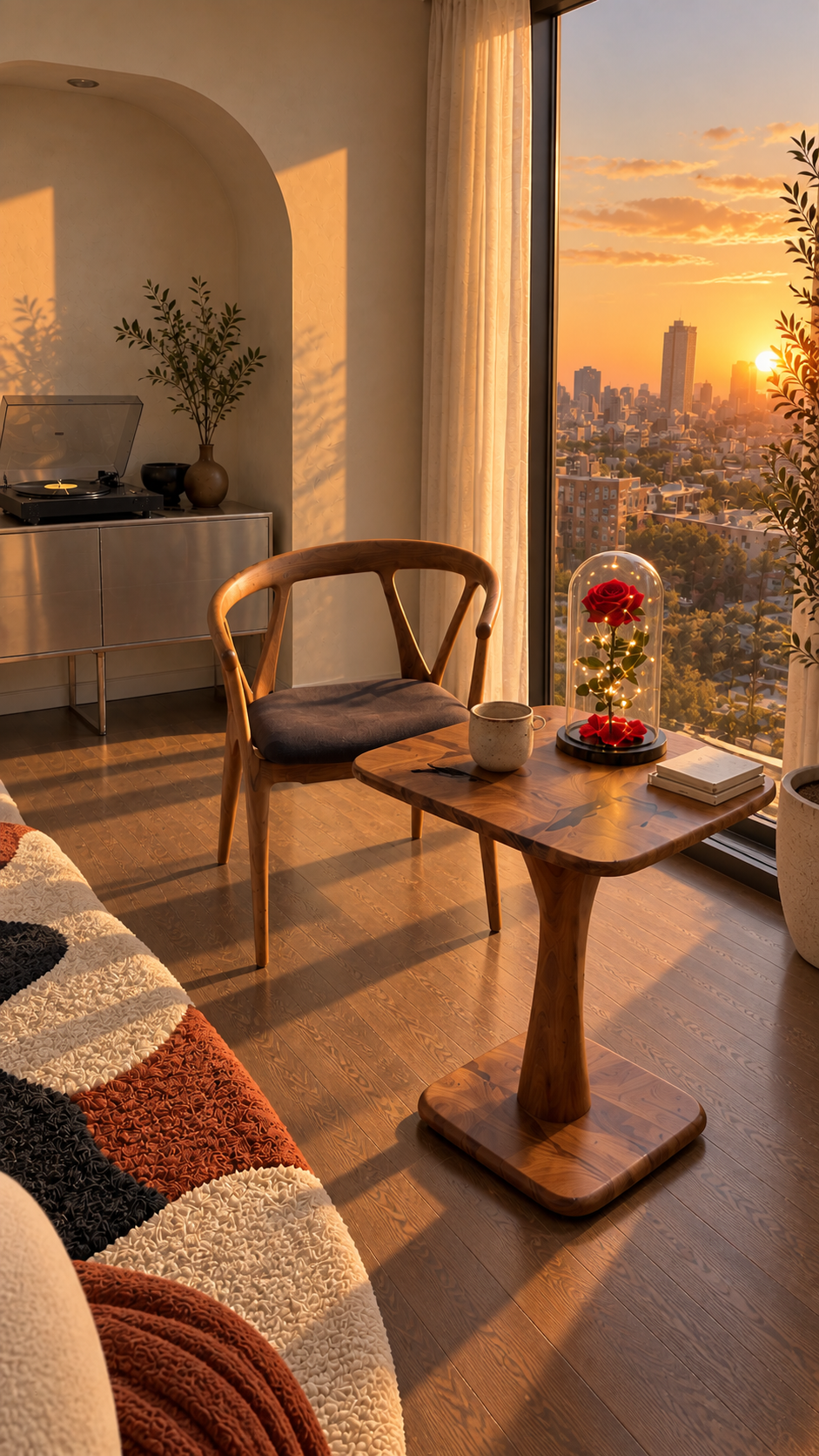
Golden-hour light creates drama because it is directional. It stretches shadows, warms natural materials and turns ordinary edges into highlights. The mistake is adding so much artificial light that the sunset stops being visible. Let the window remain the primary source and use one quiet lamp on the darker side of the room only if the contrast becomes uncomfortable.
This is also when sculptural furniture earns its place. A curved chair back, a pedestal table and a glass dome all catch and interrupt light differently. Their silhouettes create a composition before you add a single decorative effect.
Night: build layers, not one bright ceiling
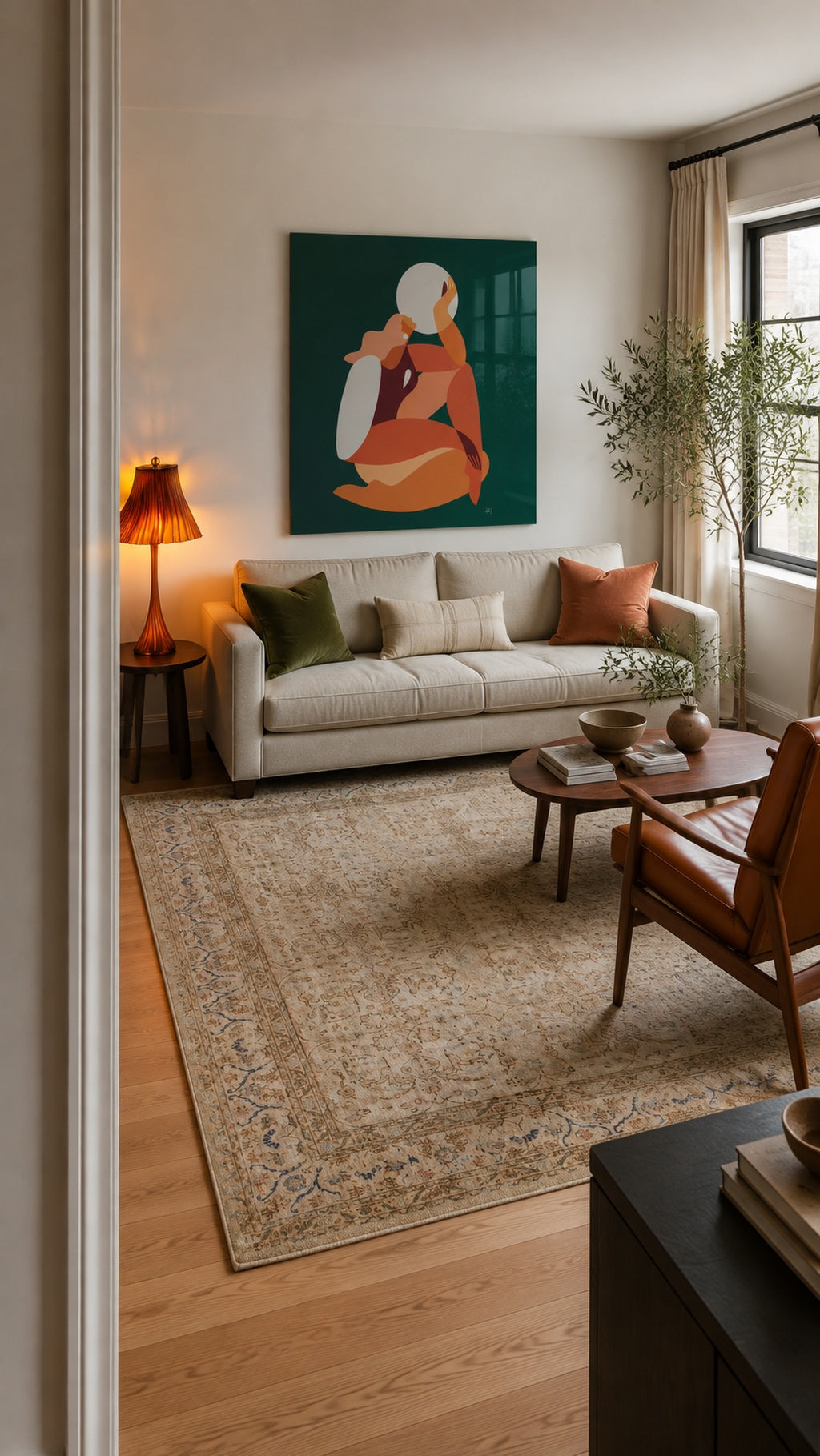
Good night lighting is rarely one fixture at full power. The Illuminating Engineering Society defines task-ambient lighting as a combination in which general ambient illumination is lower than—and complementary to—the task light. In a living room, that can mean a dim overall glow, a focused reading source and one accent that gives depth to a plant, record console or sculptural object.
Place those sources at different heights. A table lamp creates a pool of light near seated eye level; a floor lamp lifts the composition; a small accent light establishes a distant boundary. The darker intervals between them are not empty space. They are what make each pool of light feel intentional.
Light also speaks to the body’s sense of time
Light is visual, but it is not only visual. The National Institute of General Medical Sciences notes that light and dark have the biggest influence on circadian rhythms. Harvard Health also explains that blue-enriched light is useful during the day because it supports alertness and synchronization with the day-night cycle, while strong blue light late in the evening can interfere with sleep for some people.
That does not mean every home must follow a rigid formula. It does suggest a practical rhythm: brighter, cooler or more daylight-driven light when you want energy; lower, warmer and more localized light as the evening winds down.
A simple four-scene lighting plan
- Morning: curtains open, fixtures mostly off, soft directional daylight.
- Midday: neutral daylight, controlled glare, clear material detail.
- Sunset: window-led warmth, long shadows, minimal fill light.
- Night: layered warm practical light with darker negative space between sources.
Keep the furniture fixed while testing each state. Photograph the room from several corners at the same height. You will quickly see whether the lighting supports the room—or whether the room is simply being illuminated.
The mood is already in the room
Lighting design is not about forcing atmosphere onto a space. It is about deciding what deserves attention, what can recede and how the materials you chose should feel at a particular hour. The most convincing rooms change with the day while still remaining unmistakably themselves.
Explore lighting and collected design at Resin Society.
Sources
- U.S. Department of Energy: Purchasing Energy-Efficient Light Bulbs
- U.S. Department of Energy: Understanding LED Color-Tunable Products
- National Institute of General Medical Sciences: Circadian Rhythms
- Illuminating Engineering Society: Task-Ambient Lighting
- Harvard Health Publishing: How Blue Light Affects Sleep and Alertness
Share: